How AI is Transforming Marketing
Published: January 12, 2024 • Category: Technology
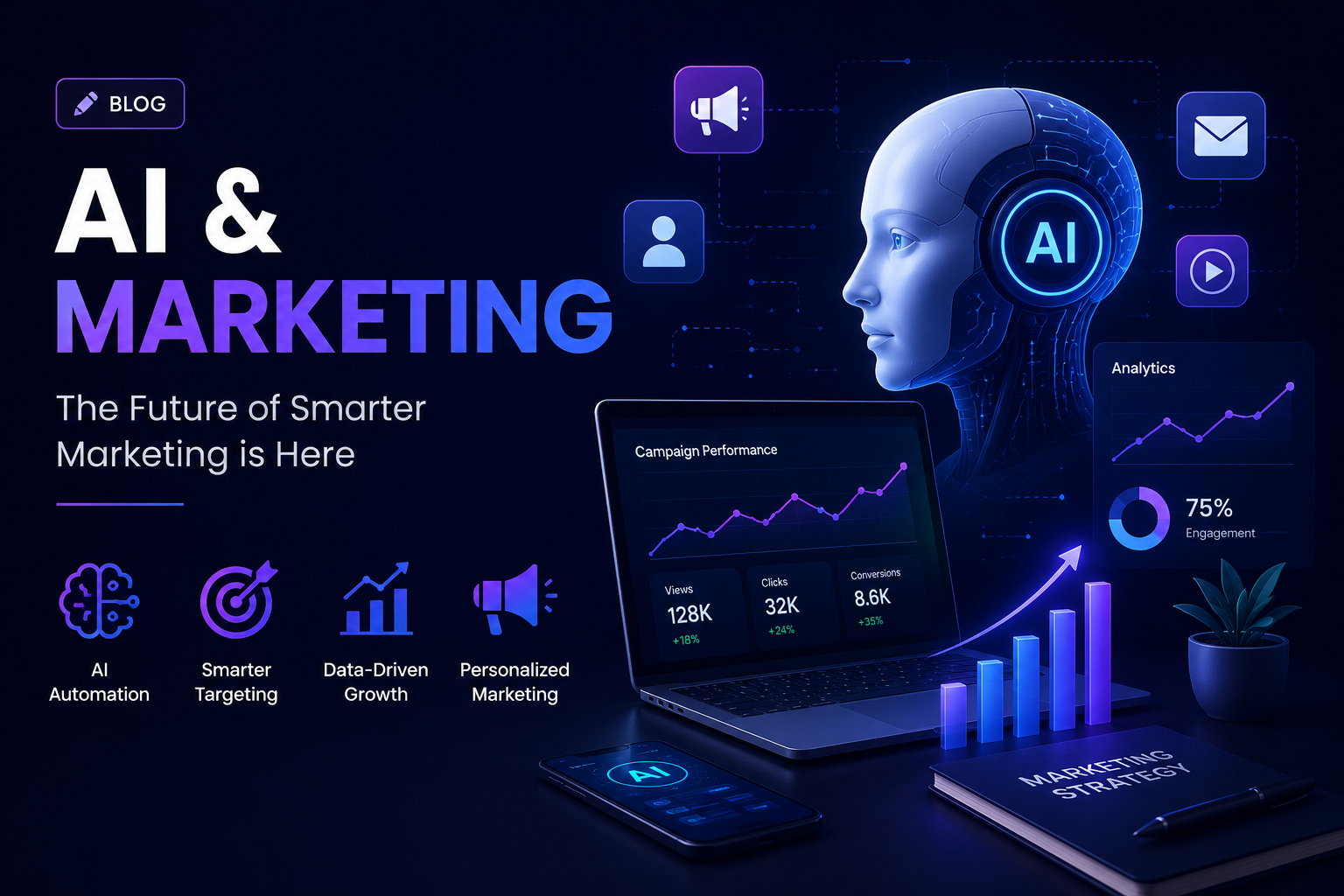
Artificial intelligence is no longer a futuristic concept — it is here, and it is fundamentally reshaping the marketing landscape. From predictive analytics to personalized customer experiences, AI empowers marketers to work smarter, not harder.
1. Hyper-Personalization at Scale
AI algorithms analyze vast amounts of customer data to deliver tailored content, product recommendations, and offers in real time. Brands like Amazon and Netflix have set the standard, but today even small businesses can leverage AI-powered tools to create one-to-one marketing experiences.
2. Predictive Analytics & Customer Insights
Machine learning models can predict customer behavior, churn risk, and lifetime value with remarkable accuracy. Marketers can proactively engage high-value segments, optimize campaign timing, and allocate budgets where they will have the greatest impact.
3. Content Creation & Copywriting
Generative AI tools such as ChatGPT, Jasper, and Copy.ai assist in drafting blog posts, social media captions, email newsletters, and ad copy. While human oversight remains essential, AI dramatically reduces the time spent on repetitive writing tasks.
4. Intelligent Chatbots & Conversational Marketing
AI-driven chatbots provide instant, 24/7 customer support and guide prospects through the sales funnel. Modern conversational agents understand natural language, remember context, and can even detect sentiment, making interactions feel genuinely human.
5. Programmatic Advertising & Ad Optimization
Programmatic platforms use AI to buy and place digital ads in milliseconds. They optimize targeting, bidding, and creative variations on the fly, ensuring that every advertising dollar delivers maximum return on investment.
6. SEO & Voice Search Optimization
AI tools analyze search patterns, keyword intent, and competitor strategies to help marketers rank higher in search results. With the rise of voice assistants like Siri and Alexa, AI also helps optimize content for natural-language queries.
7. Visual Recognition & Social Listening
AI-powered image recognition and social listening platforms scan millions of posts, images, and videos to track brand mentions, sentiment, and emerging trends. This real-time intelligence allows brands to respond quickly to cultural moments and customer feedback.
8. Dynamic Pricing & Revenue Optimization
E-commerce and travel industries use AI to adjust prices dynamically based on demand, competitor pricing, inventory levels, and customer profiles. This maximizes revenue while keeping offers competitive and fair.
9. Marketing Automation & Workflow Efficiency
AI-powered automation platforms handle email sequencing, lead scoring, campaign triggering, and performance reporting. Marketers can focus on strategy and creativity while AI manages the operational heavy lifting.
10. Ethical AI & Data Privacy
As AI becomes more pervasive, ethical considerations around data privacy, bias, and transparency are paramount. Responsible marketers are adopting explainable AI models, ensuring compliance with regulations like GDPR and CCPA, and building trust with their audiences.
The Bottom Line
AI is not replacing marketers — it is augmenting them. The most successful marketing teams of the future will be those that combine human creativity, empathy, and strategic thinking with the speed, scale, and intelligence of artificial intelligence. The transformation is already underway; the question is not if you should adopt AI, but how fast you can integrate it into your marketing stack.
Ready to embrace the AI revolution? Start small, experiment often, and always keep the customer at the center of every algorithm.